
 VR
Sawan Badho
400 guests max99,861 sq.ft.
Delhi, India, India
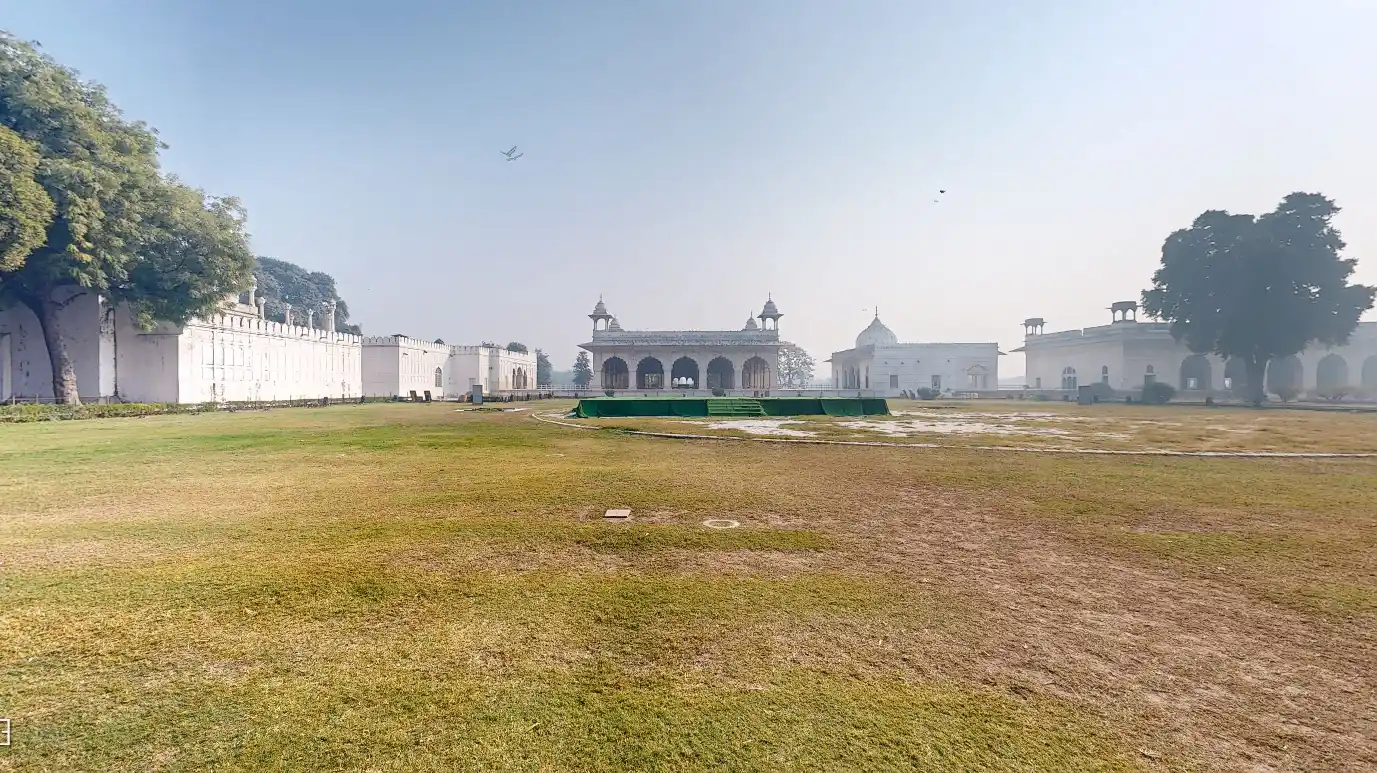
The Diwan-i-Khas, or Hall of Private Audience, stands as one of the most celebrated chambers within the Red Fort complex in Chandni Chowk, Delhi. Constructed in 1648 under the reign of Mughal Emperor Shah Jahan, this marble pavilion was the private meeting hall where the emperor received dignitaries, nobles, and ambassadors in an atmosphere of extraordinary refinement. The hall's very name — meaning "Hall of Special Audiences" — speaks to its original purpose: a space reserved for the most distinguished guests and the most consequential conversations of the Mughal court.
The structure is built entirely of white marble and is celebrated for its ornate pietra dura inlay work, featuring intricate floral and geometric patterns crafted from semi-precious stones. The interior once housed the legendary Peacock Throne, and an Persian inscription running along the chamber's upper walls — "If there is paradise on earth, it is this, it is this, it is this" — remains one of the most quoted architectural dedications in Indian history. Four towers anchor the corners of the pavilion, and the double-tiered roof lends the space an airy grandeur that sets it apart from the more imposing stone structures elsewhere within the Fort.
Diwan-i-Khas sits within the UNESCO World Heritage Site of Red Fort, a monument of immense national significance. Red Fort was designated a World Heritage Site by UNESCO in 2007, and the broader complex draws millions of visitors each year, making it one of India's most visited historical landmarks. The Fort is located in Chandni Chowk, Old Delhi — a neighbourhood that has been a centre of commerce, culture, and history for over three centuries. It is well connected to the rest of Delhi via the Chandni Chowk Metro Station on the Yellow Line, which sits directly adjacent to the Fort's Lahori Gate entrance.
The Diwan-i-Khas is positioned deeper within the Fort's inner sanctum, past the Diwan-i-Am (Hall of Public Audience), placing it in one of the most historically significant and visually arresting parts of the entire complex.
As a protected monument under the Archaeological Survey of India (ASI), Diwan-i-Khas is open to the public as a heritage site rather than a conventional privately bookable event venue. It forms part of the broader Red Fort complex, which serves as the site of India's annual Independence Day celebrations on 15 August, when the Prime Minister addresses the nation from the Fort's ramparts. The space is visited by history enthusiasts, architects, scholars, travellers, and cultural groups from around the world.
For event planners and organisations seeking to engage with this space — whether for heritage walks, cultural programming, documentary production, or institutional visits — engagement is coordinated through the Archaeological Survey of India, which oversees the site. The Diwan-i-Khas offers an unparalleled sense of historical depth and architectural splendour that no purpose-built venue can replicate.
No reviews yet. Be the first to share your experience at Red Fort.
The Diwan-i-Khas is a protected monument under the Archaeological Survey of India (ASI) and is not a conventionally bookable private event venue. Any use of the space beyond standard public access — such as for cultural programming, filming, or institutional events — requires coordination and approval from the ASI. Interested parties should contact the ASI directly to understand what permissions may be granted.
The Diwan-i-Khas falls under the jurisdiction of the Archaeological Survey of India, which manages and conserves the entire Red Fort complex as a protected heritage site. All requests related to special access, filming, or organised programming within the complex must be directed to the ASI. The ASI sets the terms and conditions for any use beyond regular visitor access.
Built in 1648 by Mughal Emperor Shah Jahan, the Diwan-i-Khas served as the Hall of Private Audience where the emperor met his most distinguished guests and officials. It once housed the legendary Peacock Throne, regarded as one of the most valuable thrones in history. The space carries a Persian inscription along its walls — 'If there is paradise on earth, it is this, it is this, it is this' — widely regarded as one of the most celebrated architectural inscriptions in India.
The Diwan-i-Khas is constructed entirely of white marble, setting it apart visually from the predominantly red sandstone structures of the Red Fort complex. Its surfaces feature elaborate pietra dura inlay work, with intricate floral and geometric patterns crafted from semi-precious stones. Four corner towers and a double-tiered roof give the pavilion an airy, refined quality that reflects its original role as the most privileged reception space in the Mughal court.
Yes, the Red Fort complex was inscribed as a UNESCO World Heritage Site in 2007, in recognition of its outstanding cultural and historical significance. The designation reflects the Fort's importance as a symbol of Mughal imperial power and its architectural achievements. The Diwan-i-Khas, as one of the most celebrated structures within the complex, contributes directly to this heritage status.
The Diwan-i-Khas is located within the Red Fort in Chandni Chowk, Old Delhi, which is directly accessible via Chandni Chowk Metro Station on the Yellow Line. The station sits adjacent to the Fort's Lahori Gate, making metro travel a practical option for visitors arriving from across Delhi. Road access is also available, though Chandni Chowk's narrow lanes mean visitors arriving by car should expect some on-street congestion.
The Diwan-i-Khas is positioned in the inner sanctum of the Red Fort, beyond the Diwan-i-Am (Hall of Public Audience), placing it among the most historically significant and architecturally refined sections of the complex. This placement reflects its original purpose as a space reserved exclusively for the emperor's most private and distinguished audiences. Visitors walk through several of the Fort's layered precincts before reaching it.
The Diwan-i-Khas is particularly well-suited to heritage walks, architectural tours, academic and scholarly visits, documentary and film productions, and cultural group programmes. Its status as one of India's most significant Mughal monuments makes it a compelling destination for history enthusiasts, architects, educational institutions, and cultural organisations. Any organised programme beyond standard public visiting hours requires prior coordination with the Archaeological Survey of India.
Entry to the Red Fort complex, which includes access to the Diwan-i-Khas, requires a general admission ticket. Ticket pricing is set by the Archaeological Survey of India and may differ for Indian nationals and international visitors. Current ticket prices and opening hours should be confirmed directly with the ASI or at the Fort's ticket counters, as these details are subject to change.
The Red Fort complex is a 17th-century heritage site with historic stone pathways and structures that may present challenges for visitors with mobility requirements. Accessibility provisions within the complex are managed by the Archaeological Survey of India. Visitors with specific accessibility needs are advised to check with the ASI in advance to understand what facilities and assistance are available.
Photography for personal use is generally permitted within the Red Fort complex, including in the Diwan-i-Khas, for visitors with a standard entry ticket. Commercial photography or filming — including for events, productions, or promotional content — requires a separate permit from the Archaeological Survey of India. Visitors should check current ASI guidelines before a visit, as rules may be updated.
The inscription 'If there is paradise on earth, it is this, it is this, it is this' runs along the upper walls of the Diwan-i-Khas and is one of the most famous architectural dedications in Indian history. It is attributed to the Persian poet Amir Khusrau and was adopted by Shah Jahan to describe the splendour of his court. The inscription draws scholars, poets, and visitors from around the world who come specifically to see it in situ.
While the Diwan-i-Am, or Hall of Public Audience, was where the Mughal emperor received the general public and heard petitions, the Diwan-i-Khas was reserved for private meetings with senior officials, foreign ambassadors, and the most distinguished guests. The Diwan-i-Khas is built of white marble, whereas the Diwan-i-Am is constructed in red sandstone with marble inlays in key areas. This distinction in materials mirrors the difference in the rank and intimacy of audiences each hall was designed to host.
The Red Fort is exceptionally well connected, with Chandni Chowk Metro Station on the Yellow Line located directly beside the Fort's Lahori Gate entrance. The area is also served by numerous bus routes and is reachable by auto-rickshaw and cab from most parts of Delhi. Old Delhi's central position in the city makes it a relatively straightforward destination for visitors travelling from both North and South Delhi.
All enquiries regarding special access, event permissions, filming, or any use of the Diwan-i-Khas beyond standard public visiting should be directed to the Archaeological Survey of India, the body responsible for the conservation and management of the Red Fort complex. The ASI maintains regional offices and can be contacted through official government channels. Planners should allow adequate lead time for any approvals, as heritage site permissions typically involve a formal review process.