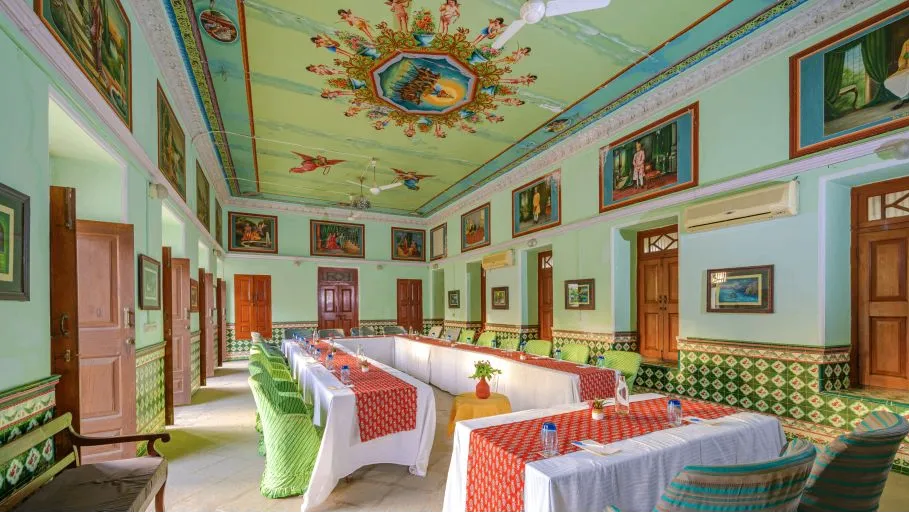
Conference Room
30 guests max910 sq.ft.

The Piramal Haveli (20th Century; Shekhavati, Rajasthan), Baggar, Shekhavati, Rajasthan, India
A century-old merchant mansion that has never stopped hosting — The Piramal Haveli - 20th Century, Shekhavati stands as one of the few lived-in heritage havelis of the Shekhavati region still receiving guests within its original walls. Built in the early 1900s by the Piramal family, one of Marwari merchant communities' prominent trading dynasties, the property retains its hand-painted frescoed interiors, ornate jharokhas, and open courtyards that have defined Rajasthani aristocratic hospitality for generations. For intimate gatherings where provenance and setting carry equal weight, few properties in Rajasthan can match this address.
The Piramal Haveli accommodates up to 30 guests in a residential-scale setting that is deliberately exclusive rather than expansive. The central courtyard — the haveli's architectural heart — serves as the primary gathering space for ceremonies, sit-down dinners, and heritage walks, offering an open-air canvas framed by frescoed archways and carved sandstone columns. Interior halls and antechamber rooms allow for breakout sessions, curated tasting arrangements, or pre-event reception setups in a heritage venue for private events in Shekhavati. Because the layout follows a traditional haveli plan rather than a purpose-built banquet floor, event flow moves through interconnected rooms and verandahs, creating a sequenced guest journey that no modern ballroom can replicate.
The property's primary strengths are private leisure retreats and small-scale social celebrations — intimate weddings for immediate family, milestone anniversary gatherings, and heritage immersion programmes for corporate offsites focused on culture and team experience. For weddings, the courtyard and its surrounding colonnades create a natural mandap setting without requiring additional décor to establish atmosphere. For corporate groups, the property facilitates curated heritage walks through Baggar's painted havelis and Shekhavati fresco trails as part of the offsite programme. Planners should note that the maximum occupancy of 30 guests is a firm structural limit; the space is architecturally configured for exclusivity, not scalability, and is not suited to conferences, large MICE requirements, or floating cocktail setups exceeding this count.
Evaluating The Piramal Haveli as an event destination requires a different planning lens than a conventional hotel or resort. Catering operates through arrangements coordinated with the property — traditional Rajasthani cuisine, prepared in the haveli kitchen tradition, is central to the food experience, and planners should discuss menu customisation and dietary requirements directly at the enquiry stage. Technical infrastructure for events — AV, PA systems, professional lighting rigs — is limited by the architectural constraints of a heritage structure; any such requirements should be scoped carefully during the RFP process to avoid misalignment. Accessibility across the haveli's multi-level, traditional floor plan should also be confirmed in advance for guests with mobility needs.
The Piramal Haveli - 20th Century, Shekhavati is listed on Spalba, where event planners can review verified venue details, check date availability, and initiate a direct conversation with the property's hosting team. Given the 30-guest ceiling and the property's calendar of private bookings, early engagement is advisable — particularly for winter-season events between October and February, when Shekhavati's temperate climate makes alfresco courtyard settings most practical. For planners weighing an intimate, architecture-forward gathering against a conventional venue, the Spalba listing is the most direct route to understanding what this singular Rajasthani haveli can genuinely deliver for a specific brief.
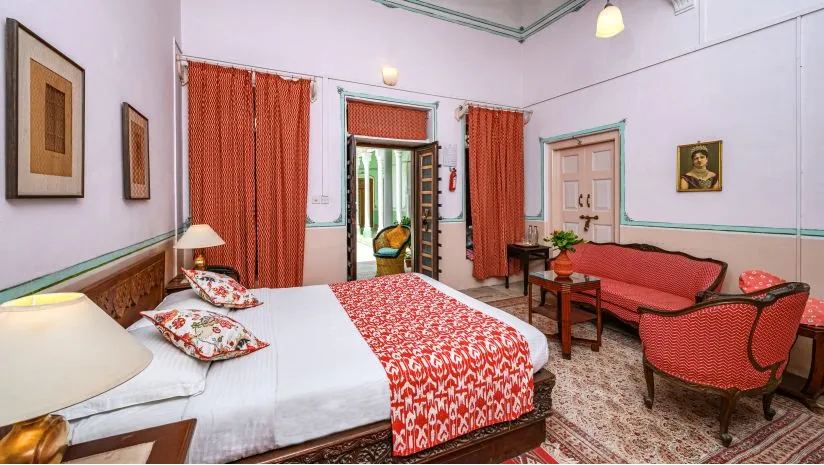
As the name suggests, the Red Room has vibrant, red floral interiors, making it one of the most aesthetically pleasing places to stay in Jhunjhunu.
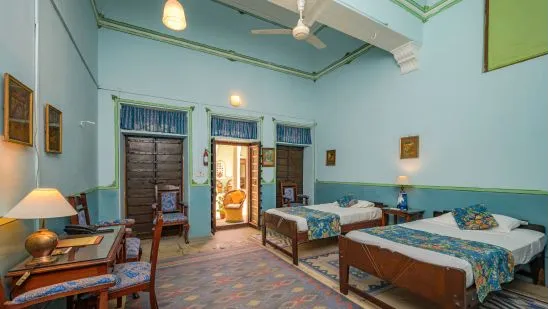
As the name suggests The Blue Room is done up in cooling blues of different hues.
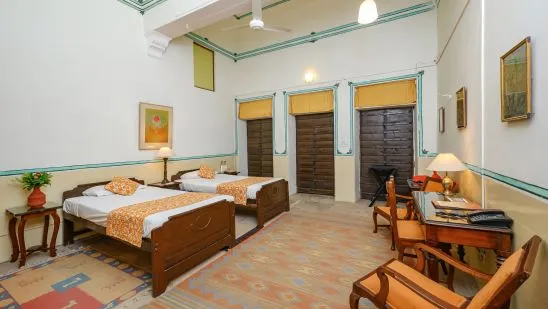
As the name suggests The Yellow Room is done up in vibrant shades of yellow and also has views on the back courtyard.
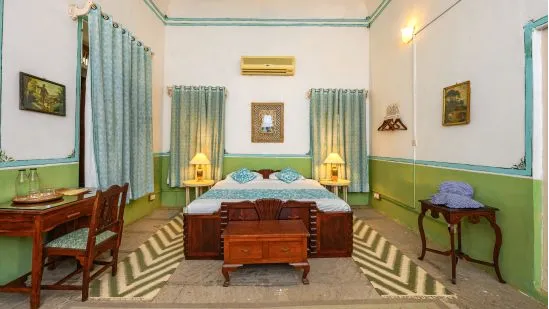
As the name suggests, The White Room, with its elegant, white interiors, is one of the most stunning rooms in Jhunjhunu.
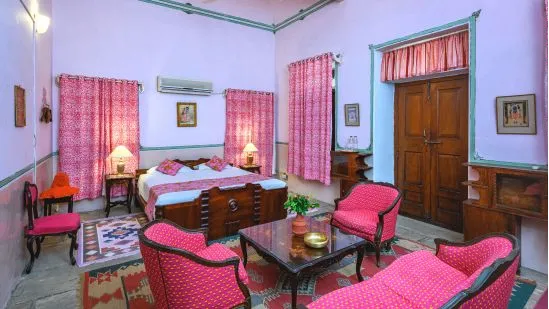
As the name suggests The Pink Room is done up in soft shades of pink and has windows that overlook the long front verandah and the garden.
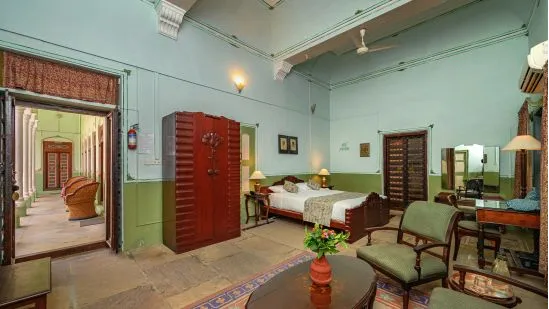
As the name suggests The Grey Room is done up in floral prints in greys.
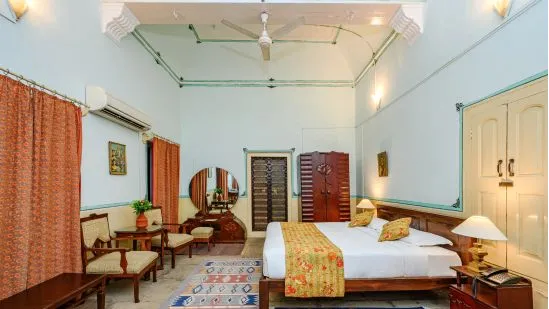
As the name suggests to evoke its name the Gold Room is done up in vibrant yellows and oranges.
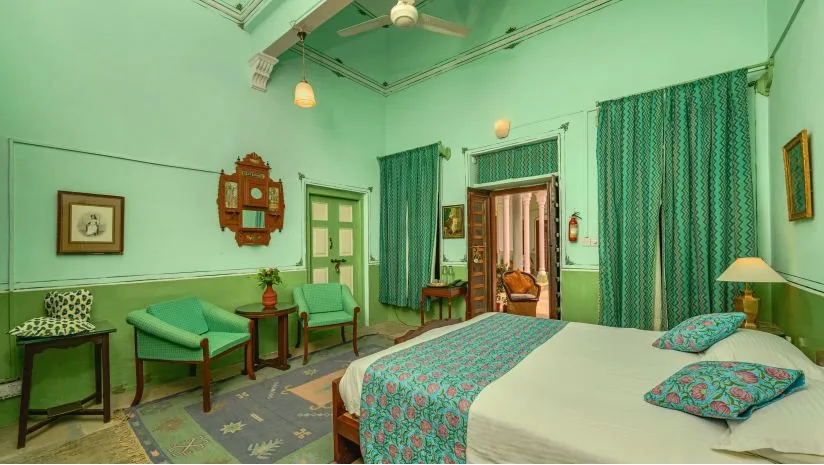
As the name suggests the Green Room has been done up in cool shades of green.
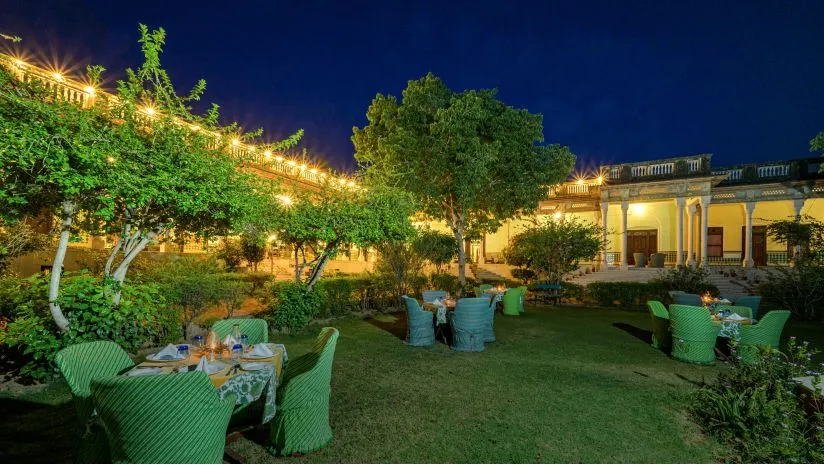
The various Neemrana properties, located all over India, offer fresh products purchased daily in that region. We prefer not to deep freeze our foods f…
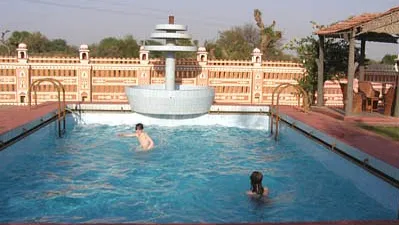
The Piramal Haveli in Shekhawati, built in the early 20th century, is a heritage property that often attracts visitors interested in experiencing trad…

1000 Hrs to 1700 Hrs
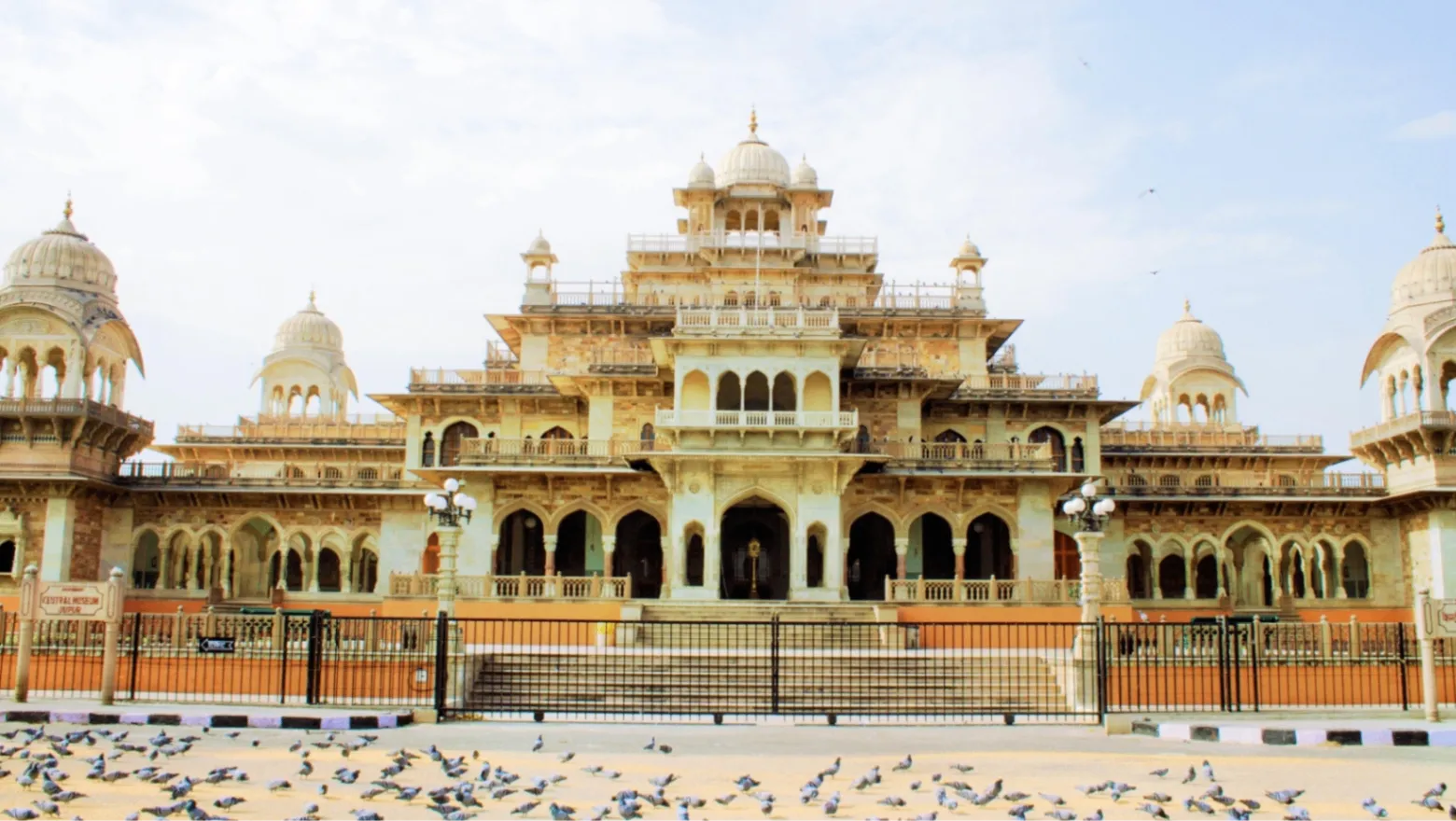
0900 Hrs to 1700 Hrs
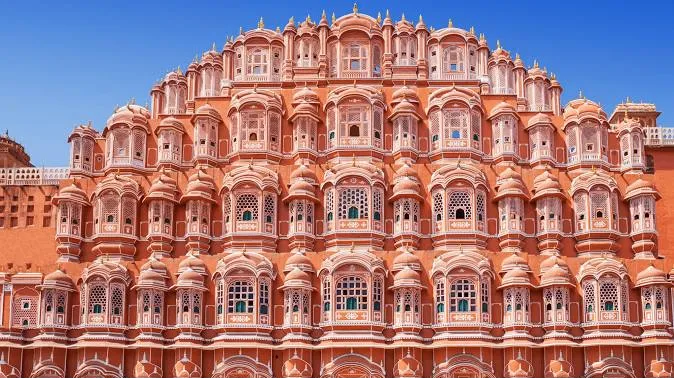
The Hawa Mahal is a palace in the city of Jaipur, Rajasthan, India. Built from red and pink sandstone, it is on the edge of the City Palace, Jaipur, and extends to the Zenana, or women's chambers.
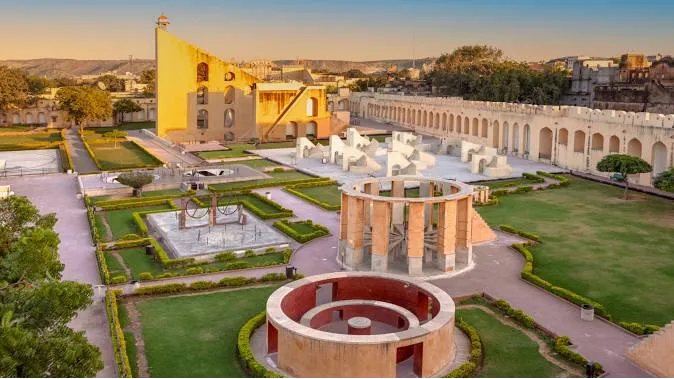
The Jantar Mantar is a collection of 19 astronomical instruments built by the Rajput king Sawai Jai Singh, the founder of Jaipur, Rajasthan. The monument was completed in 1734. It features the world's largest stone sundial, and is a UNESCO World Heritage Site. It is near City Palace and Hawa Mahal.
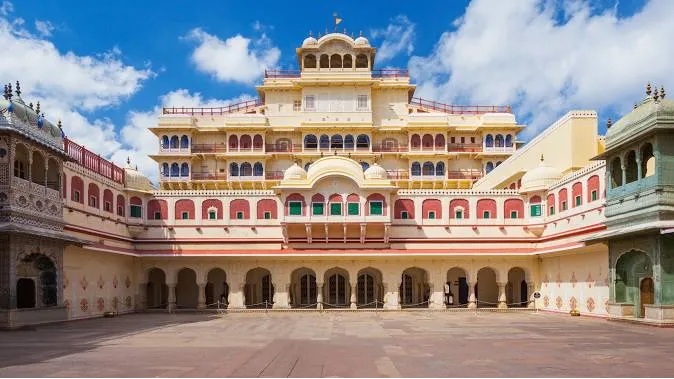
The City Palace, Jaipur is a royal residence and former administrative headquarters of the rulers of the Jaipur State in Jaipur, Rajasthan. Construction started soon after the establishment of the city of Jaipur under the reign of Maharaja Sawai Jai Singh II, who moved his court to Jaipur from Amber
No reviews yet. Be the first to share your experience at The Piramal Haveli - 20th Century, Shekhavati.
The Piramal Haveli in Baggar is a heritage property that can host intimate to mid-size gatherings, making it a sought-after heritage event venue in Shekhavati for curated celebrations. Capacity varies by setup and space configuration across its courtyards and indoor halls. Planners are encouraged to submit an enquiry on Spalba to receive accurate capacity details tailored to their specific event format.
The Piramal Haveli hosts weddings, destination wedding functions, corporate retreats, heritage walks, cultural evenings, and private social gatherings. The 20th-century Marwari architectural setting provides a distinctive backdrop for milestone celebrations and experiential corporate offsites that standard banquet venues cannot replicate. Its heritage character makes it especially well suited to multi-day destination events.
The Piramal Haveli features traditional haveli courtyards that serve as outdoor event spaces, a hallmark of Shekhavati heritage properties. These open-air areas are suited to ceremonial functions, sangeet nights, and sundowner gatherings. Weather suitability and exact dimensions for each courtyard can be confirmed through the Spalba listing enquiry form to plan layouts accordingly.
The Piramal Haveli offers in-house catering rooted in traditional Rajasthani and Marwari cuisine, a defining feature of heritage hospitality venues in Shekhavati. Vegetarian and Jain meal options are typically accommodated at properties of this type. Specific menu customisation, cuisine variety, alcohol policy, and per-plate pricing details should be confirmed directly by raising an enquiry through the Spalba platform.
Heritage properties like The Piramal Haveli balance period aesthetics with functional event infrastructure. Available AV equipment, PA systems, projector setups, and Wi-Fi connectivity details are best verified through the Spalba enquiry process, as technical specifications at heritage venues are often tailored event by event. Planners requiring dedicated AV support should flag those requirements at the time of initial booking.
The Piramal Haveli functions as a heritage stay property with guest rooms housed within the restored haveli. Outstation wedding guests and corporate retreat participants can be accommodated on-site, removing the logistical complexity of arranging external hotels. Exact room count, suite availability, and room-block policies for event bookings can be confirmed via the Spalba listing page enquiry tool.
Baggar, where The Piramal Haveli is located, sits in the Shekhavati region of Rajasthan and is approximately 165 kilometres from Jaipur International Airport, a key gateway for destination event travel in Rajasthan. The drive from Jaipur typically takes around two and a half to three hours via NH-11. Planners coordinating outstation guest transfers should factor this distance into arrival logistics.
Jhunjhunu railway station is among the closest rail access points to Baggar and The Piramal Haveli, located roughly 20 to 25 kilometres away. Sikar and Churu also serve the broader Shekhavati belt. For guests travelling by train from Delhi or Jaipur, local taxi transfers from Jhunjhunu can be arranged. Exact transfer coordination should be confirmed with the property at booking stage.
Heritage havelis built in the early 20th century were designed with traditional Rajasthani architecture, which may include raised thresholds, open courtyards with uneven surfaces, and staircase-accessed upper levels. Accessibility provisions for differently-abled guests should be discussed directly with the property team before confirming a booking, so that suitable arrangements or space allocations can be identified in advance.
Destination heritage properties in Rajasthan like The Piramal Haveli attract strong advance bookings, particularly for the peak wedding and event season between October and March. Securing dates six to twelve months ahead is advisable for weddings and multi-day corporate retreats. Planners can check live availability and initiate a booking request directly through the Spalba property listing to lock in preferred dates.
Submitting an enquiry through The Piramal Haveli Shekhavati listing on Spalba connects event planners directly with the property team. Spalba's platform allows planners to share event dates, guest count, and specific requirements in a structured format, accelerating the quotation process. Following the initial enquiry, the property team typically responds with availability, package options, and a site visit or virtual walkthrough invitation.
Cancellation and refund policies for events at The Piramal Haveli are governed by the terms agreed upon at the time of booking confirmation. Heritage destination properties commonly apply tiered cancellation schedules tied to proximity of the event date. Planners should request the full written terms during the booking negotiation phase and ensure all conditions are documented before transferring any advance payment.
The Piramal Haveli's setting as a restored Marwari heritage haveli makes it a distinctive choice for destination weddings in Rajasthan. Properties of this profile typically offer on-ground coordination support for multi-function wedding itineraries spanning mehendi, sangeet, pheras, and post-wedding brunch. Specific details about a dedicated wedding planning team, empanelled vendors, and décor customisation should be confirmed through the Spalba enquiry process.
The Piramal Haveli is well positioned for corporate retreats and leadership offsites where experiential settings drive engagement beyond standard conference facilities. The haveli's heritage ambience, combined with Shekhavati's cultural heritage tourism circuit, adds a tangible programme element for executive teams. Meeting room availability, projector setups, and corporate billing with GST-compliant invoicing should be confirmed directly at the enquiry stage via Spalba.
Policies on external decorators and vendors vary by heritage property and are often subject to empanelled vendor lists or prior approval requirements to protect the integrity of the restored structure. Planners working with preferred florists, lighting designers, or entertainment vendors should clarify the external vendor policy with The Piramal Haveli team before finalising contracts, which can be initiated through the Spalba enquiry form.